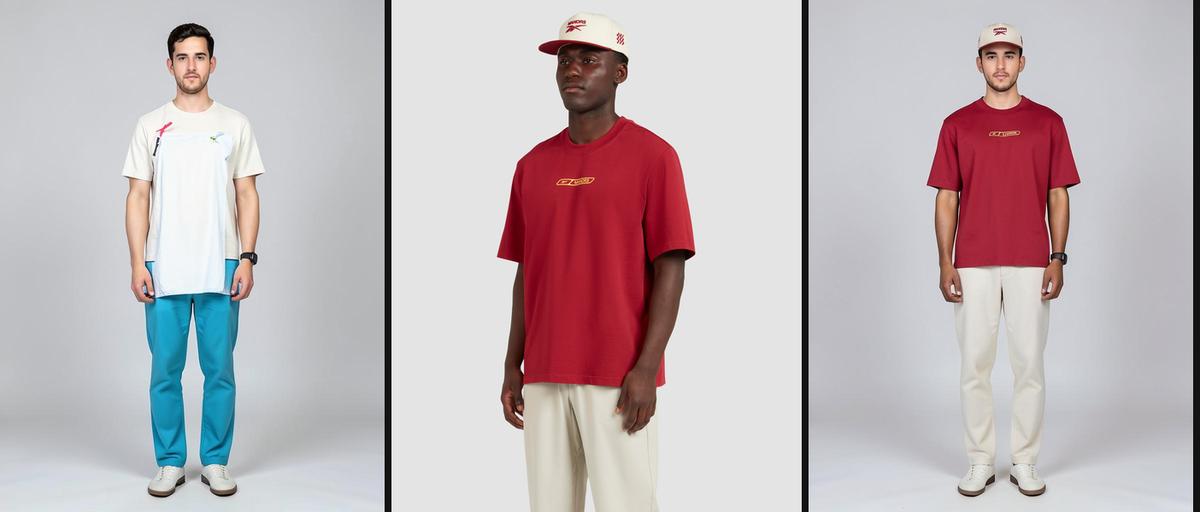
// virtual_try_on_evaluation
Virtual try-on at
97% less cost.
50 generations across 4 evaluation tasks, run against Swap Commerce's garment dataset using Prodia's inference API. All results, timing, cost, and quality notes documented per the evaluation spec.
Task 01
Avatar Generation
6 avatars · inference.flux-2.klein.4b.img2img.v1 · $0.004/avatar · 1.2–6.1s each
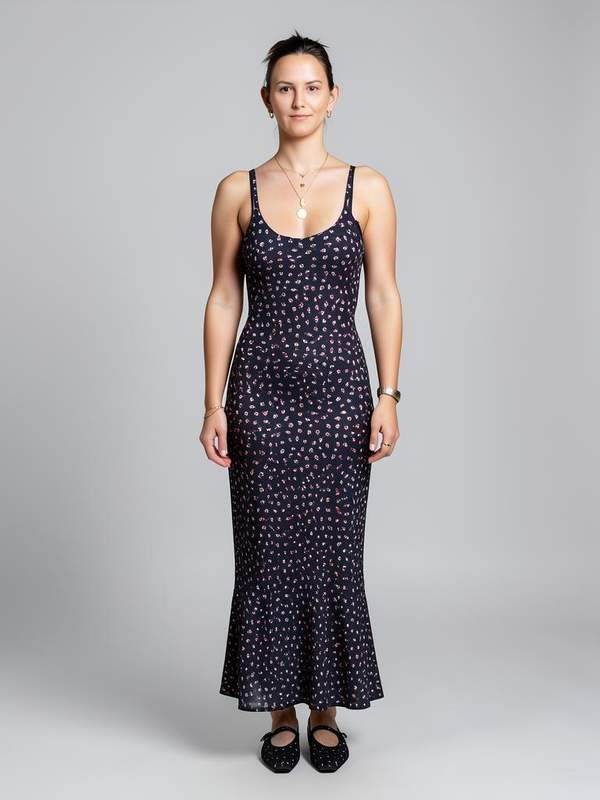
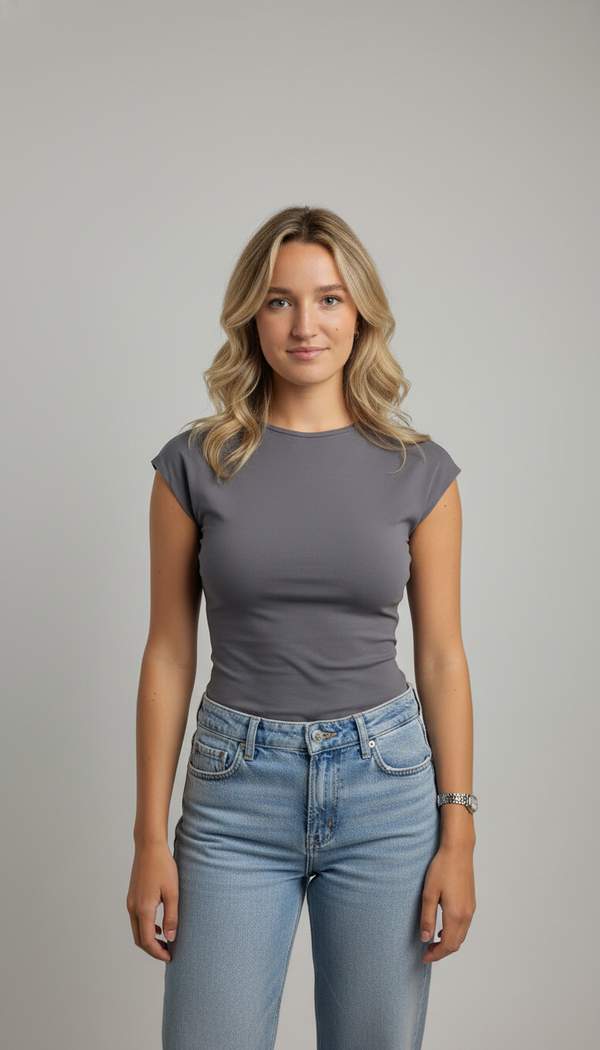
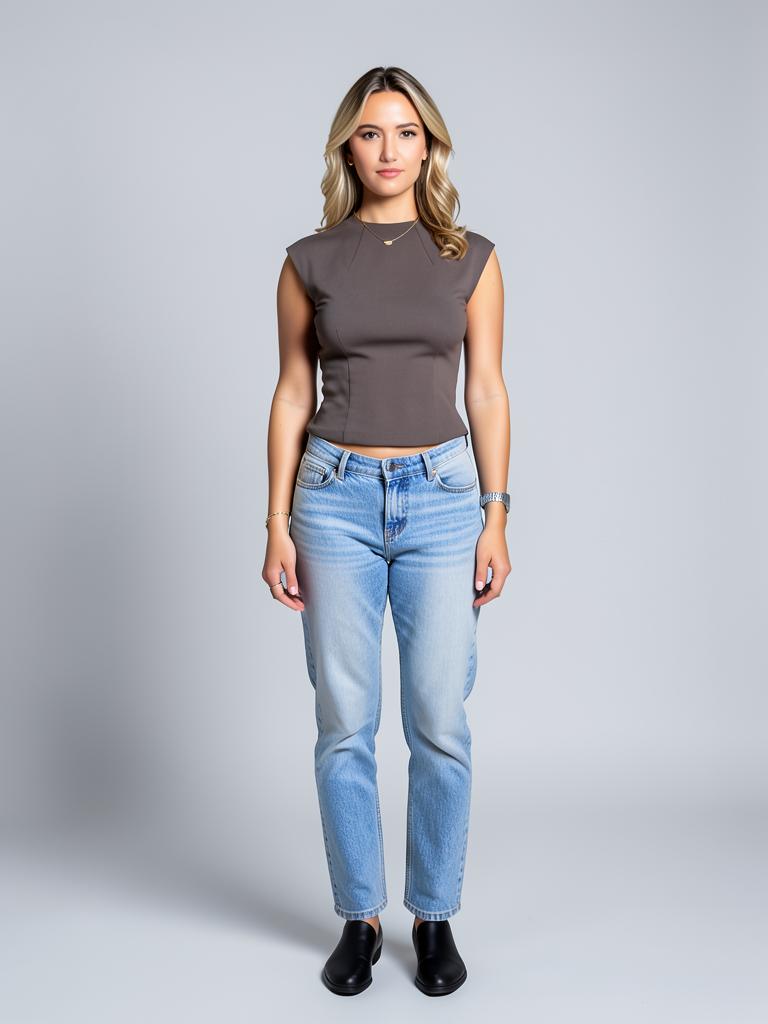
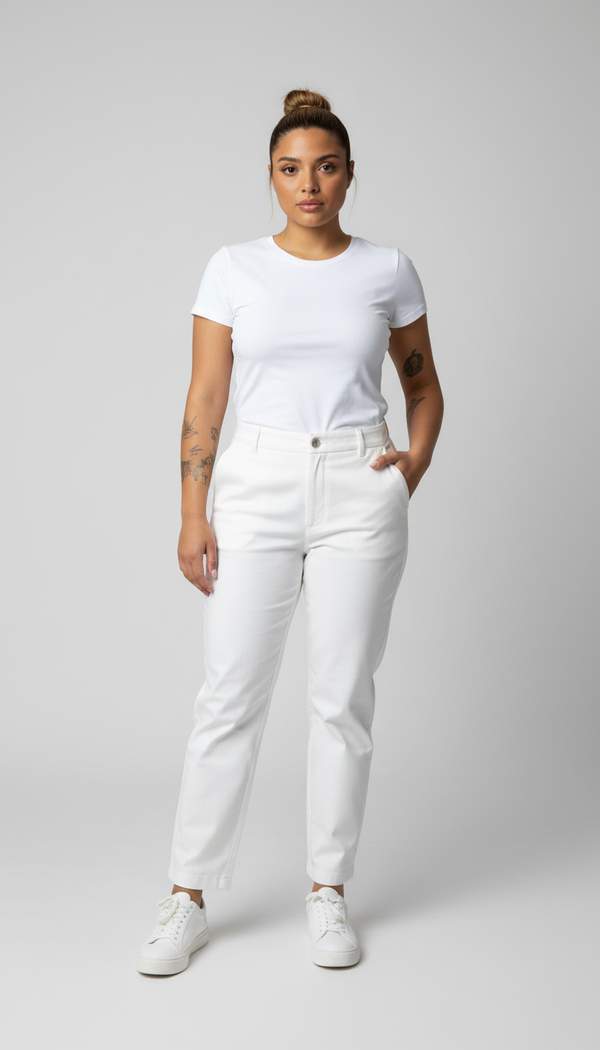
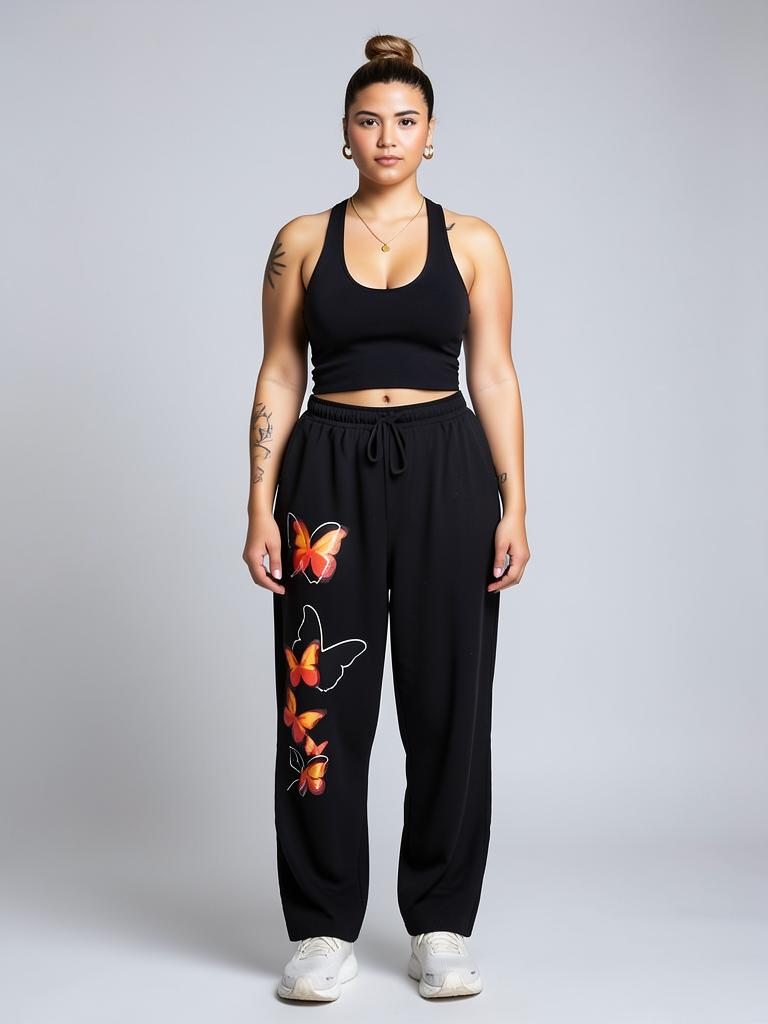
Transform real user photos into clean, full-body avatars on a neutral background. Each row shows the original user photo (left) alongside the Prodia-generated avatar (right).
Input: Variable-quality user photos · Output: Full-body avatar, neutral background · Model: Klein 4B img2img · Preprocessing: None
Male
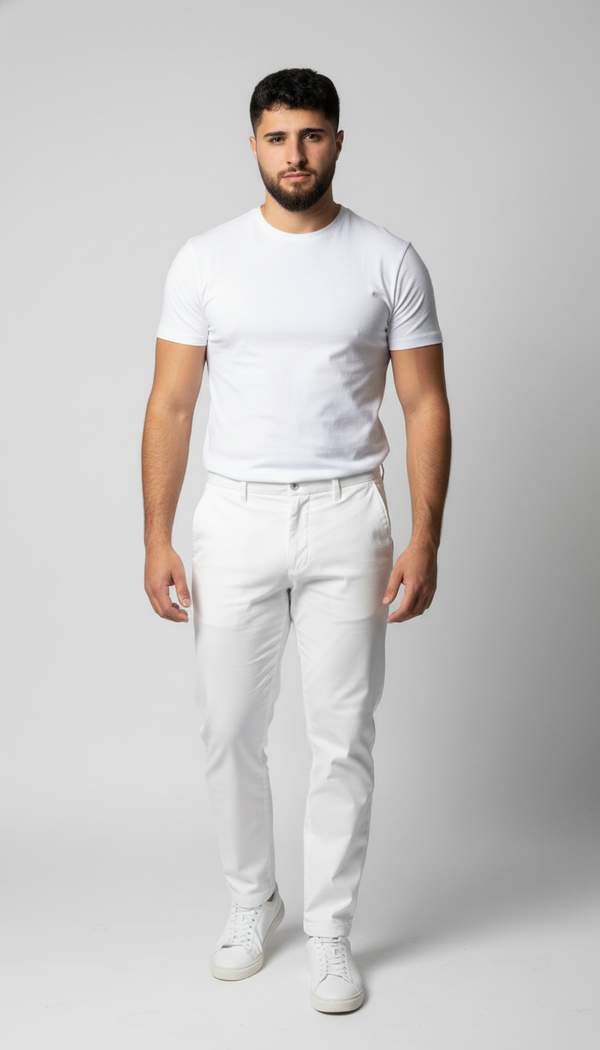
User Photo
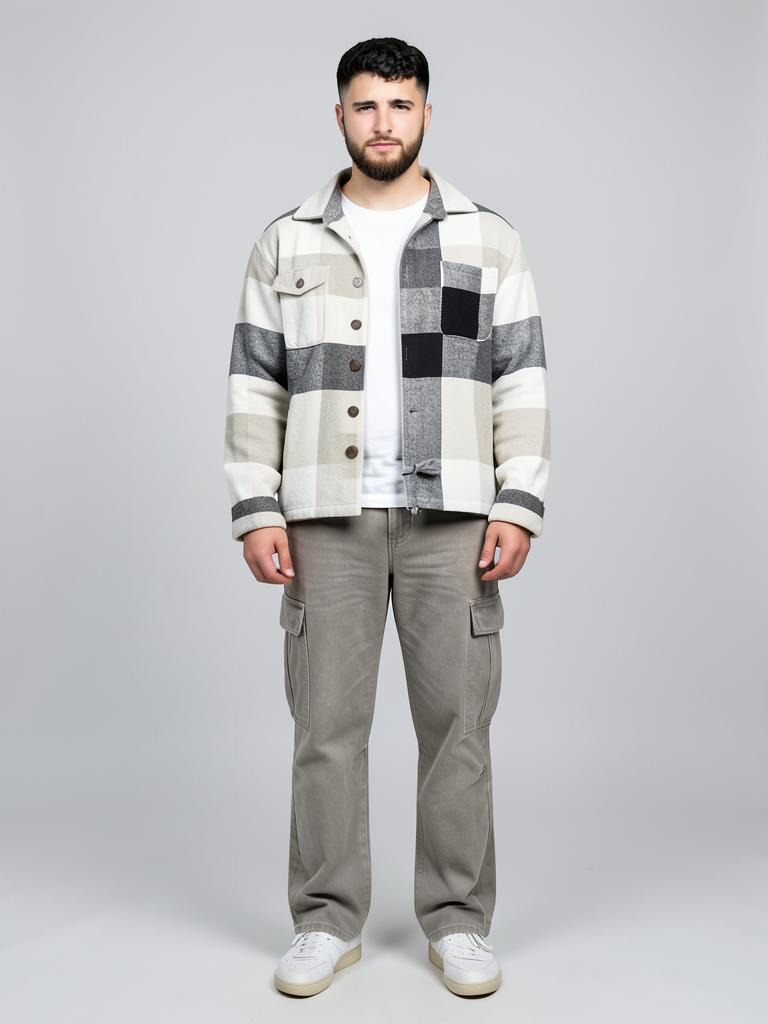
Prodia Output
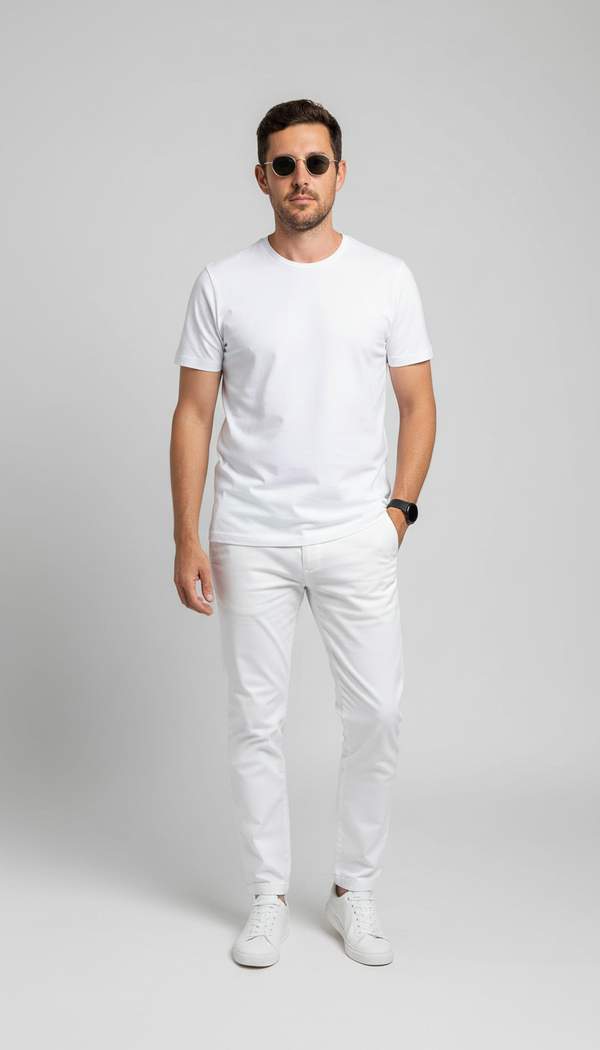
User Photo
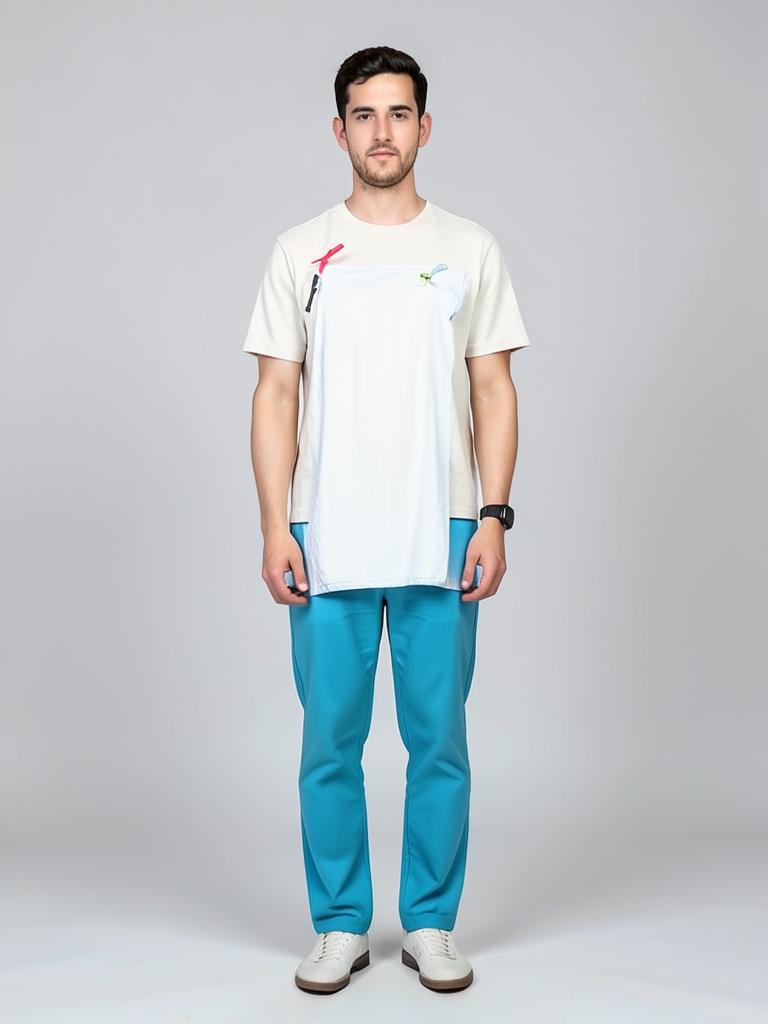
Prodia Output
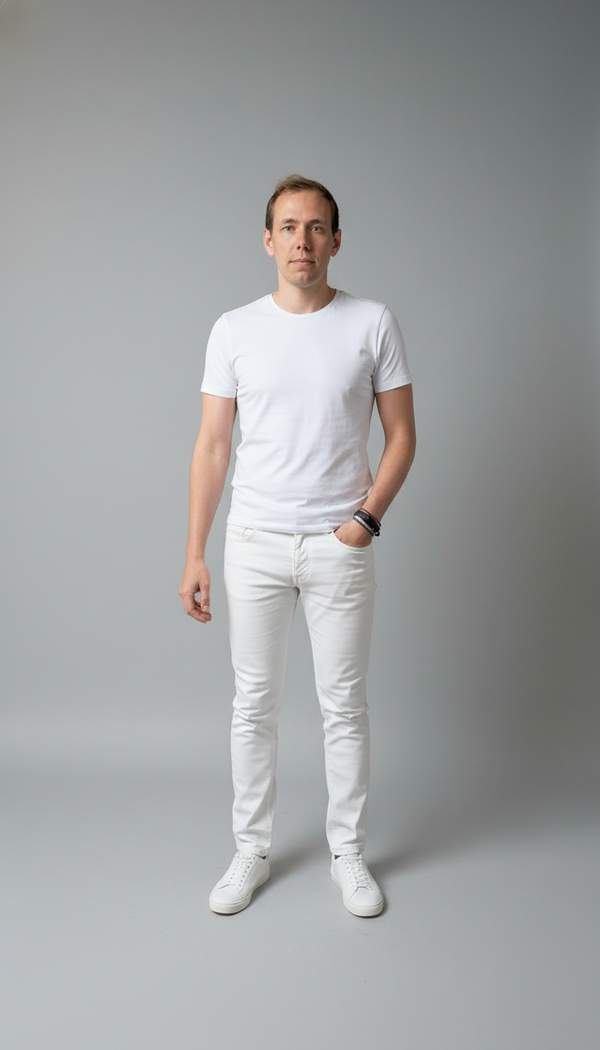
User Photo
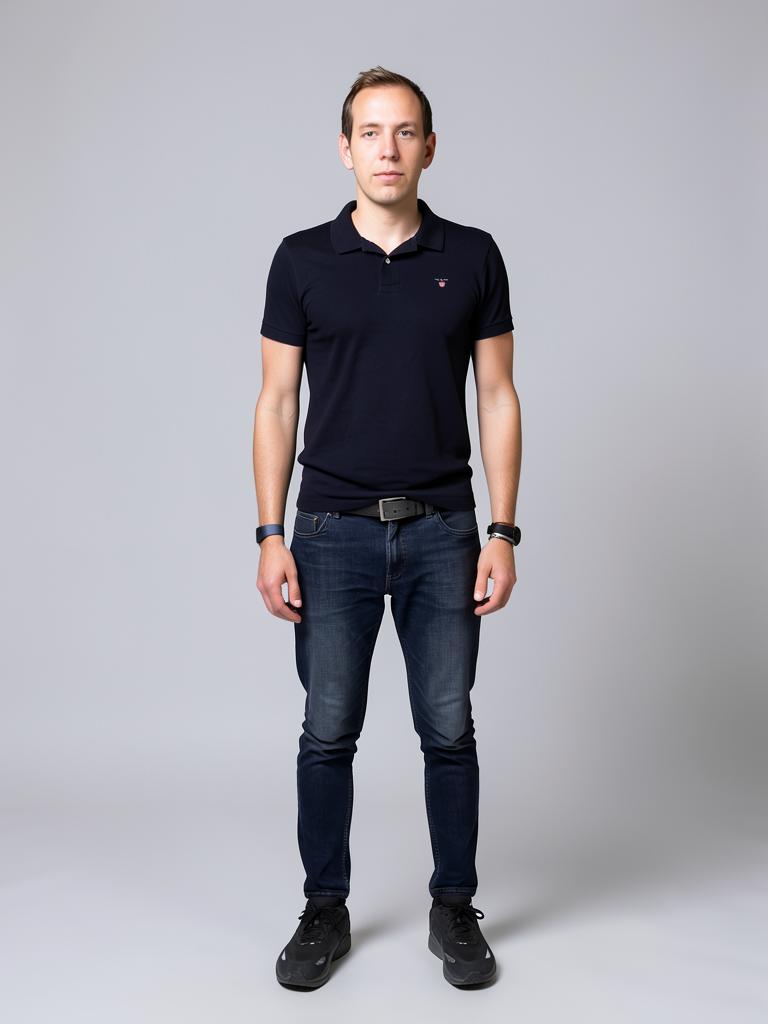
Prodia Output
Female
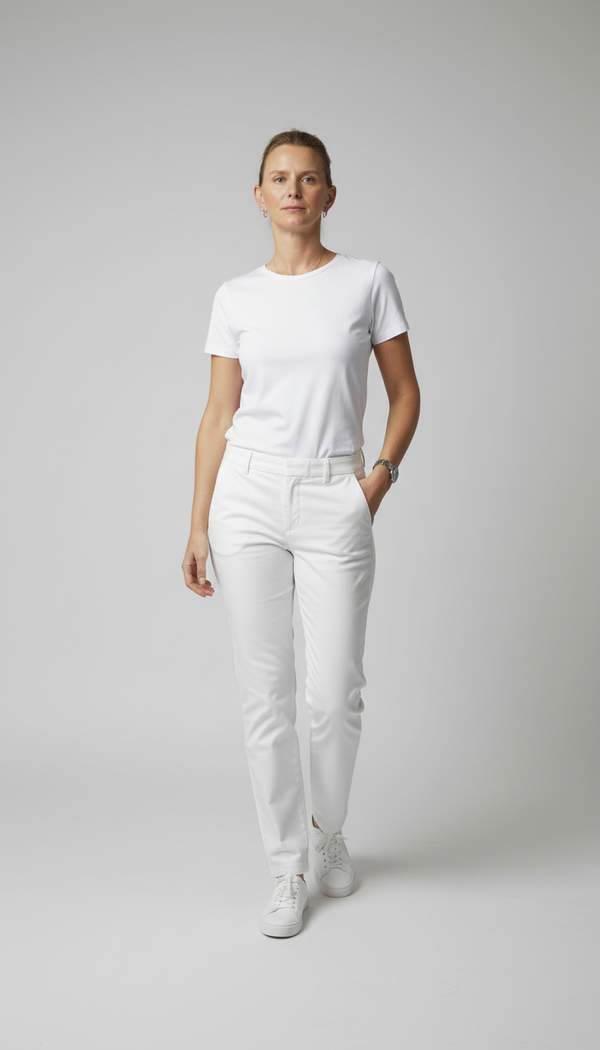
User Photo
Prodia Output
User Photo
Prodia Output
User Photo
Prodia Output
Quality notes: Clean full-body avatars on neutral gray backgrounds. Main limitation: clothing is generated (hallucinated) rather than replaced with neutral styling. Face identity preservation ~80%. No major limb distortion.
Task 02
Single-Item Try-On
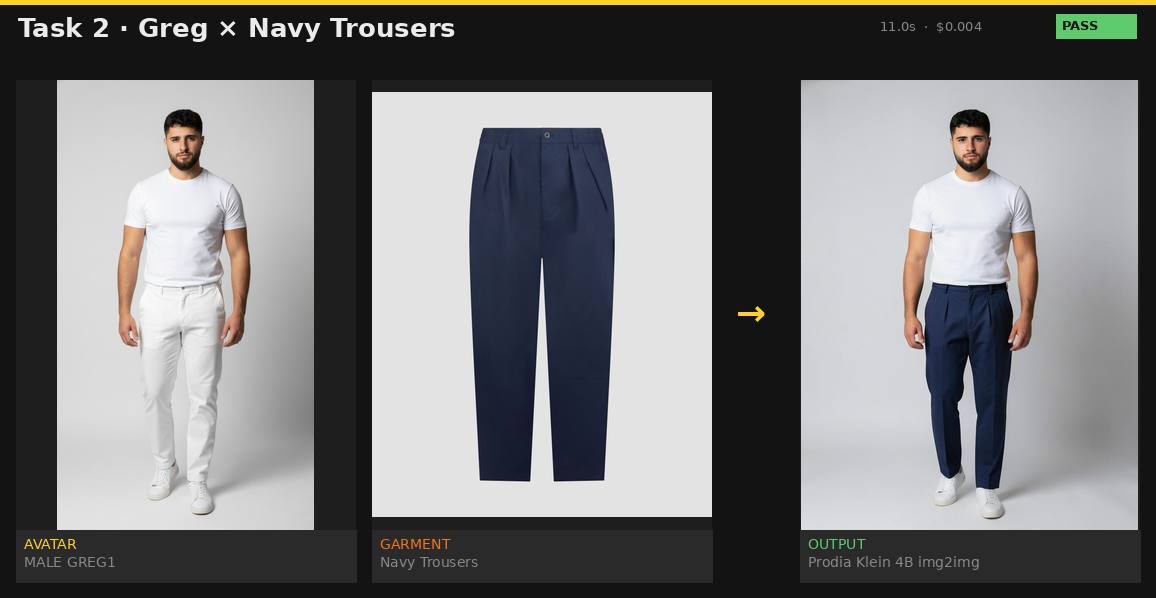
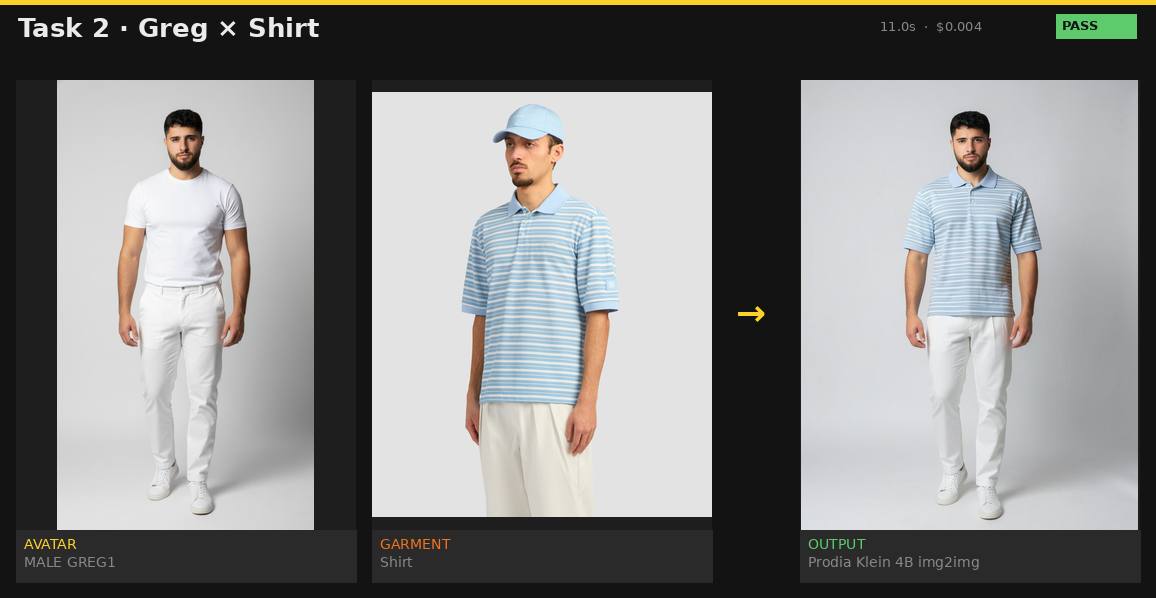
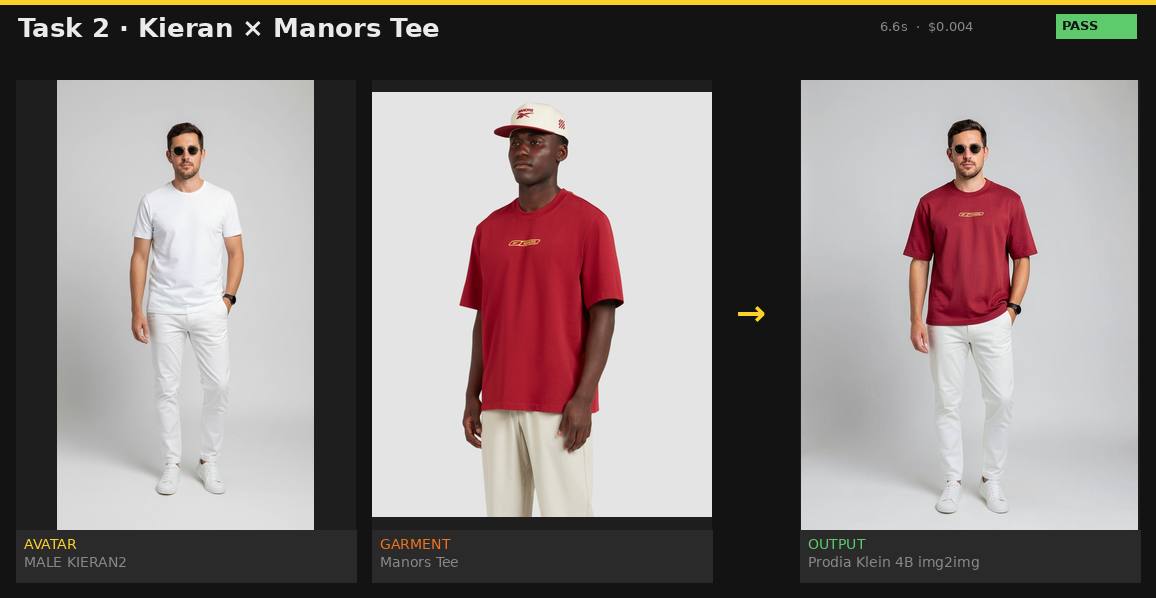
10 try-ons · inference.flux-2.klein.4b.img2img.v1 · $0.004/each · 0.7–11.0s
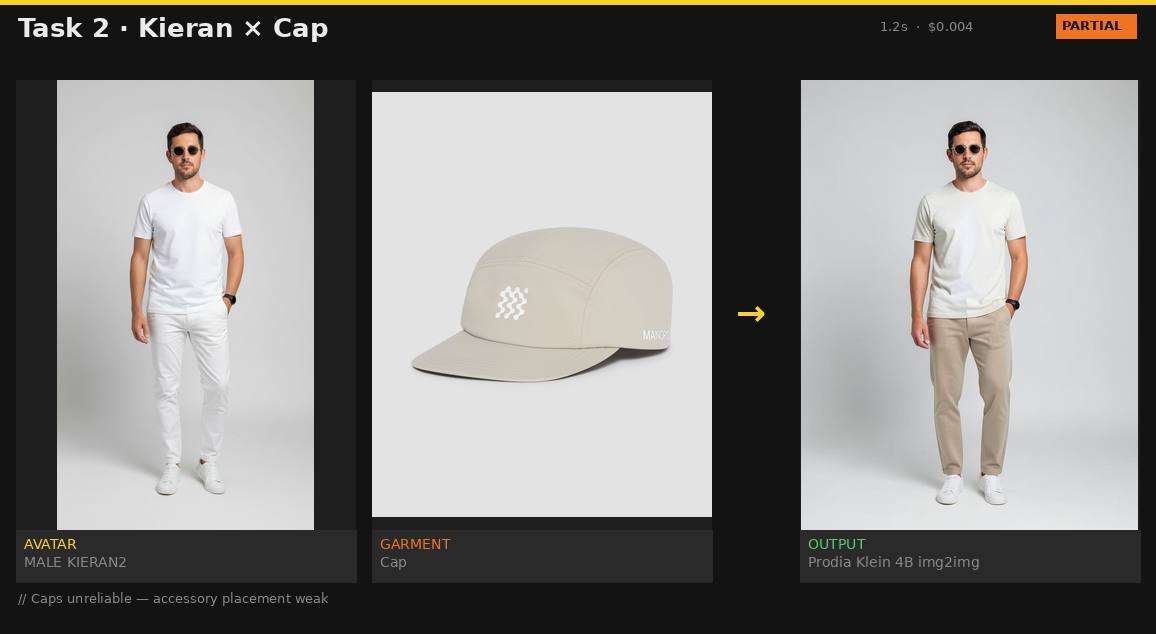
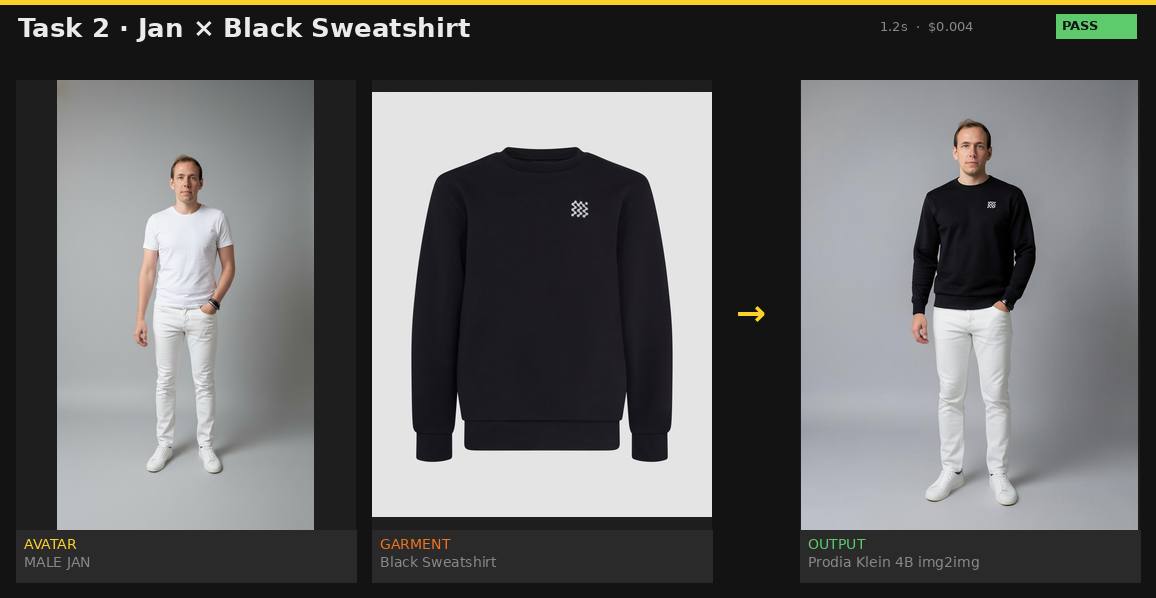
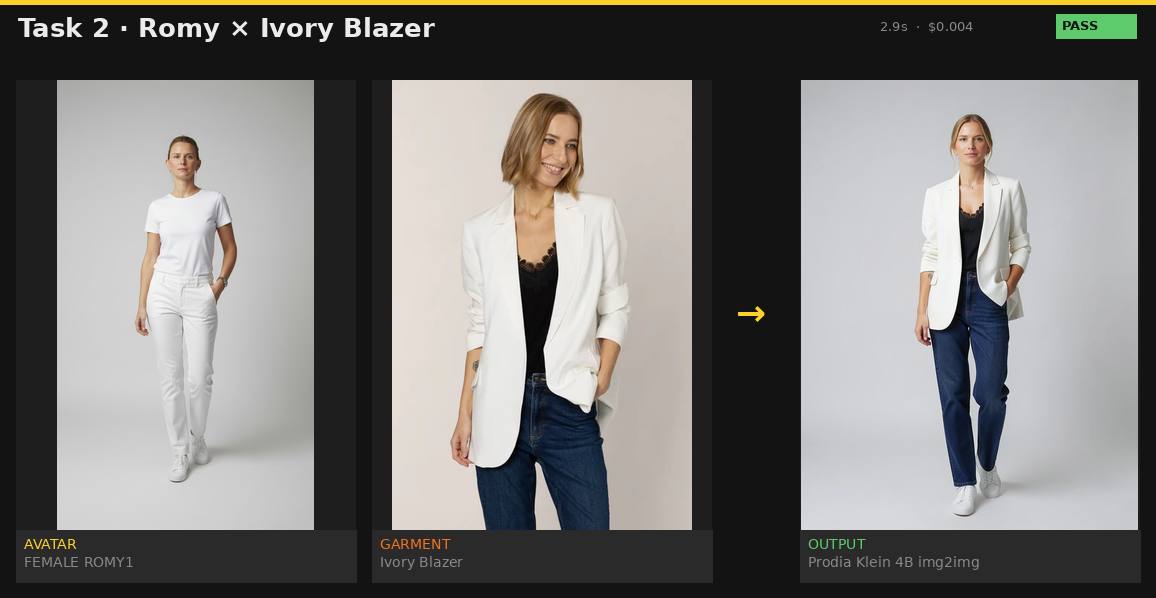
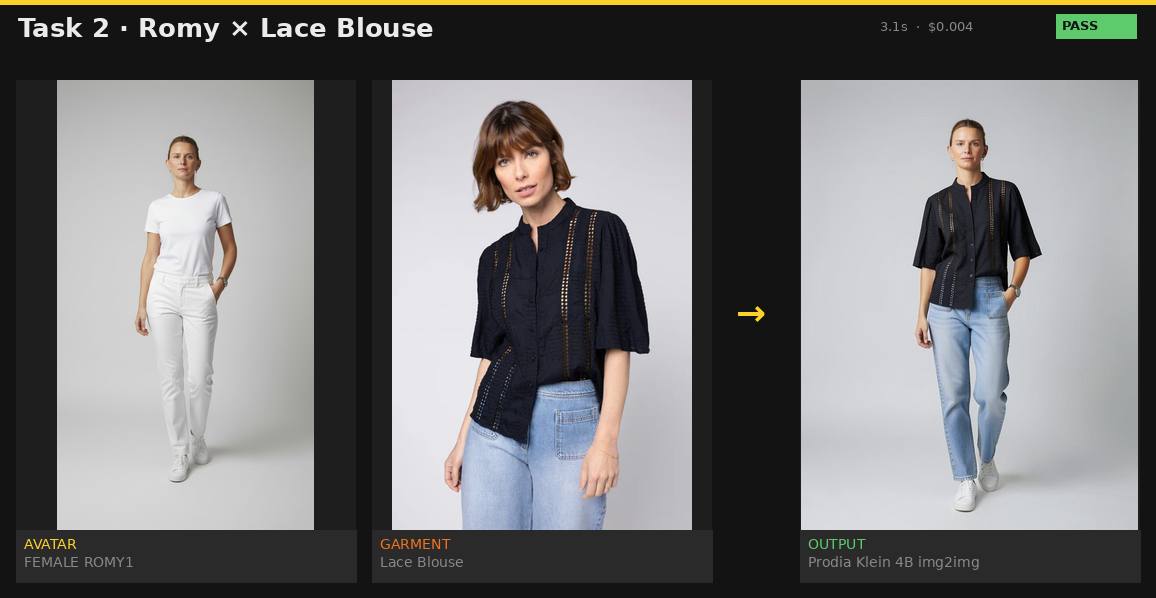
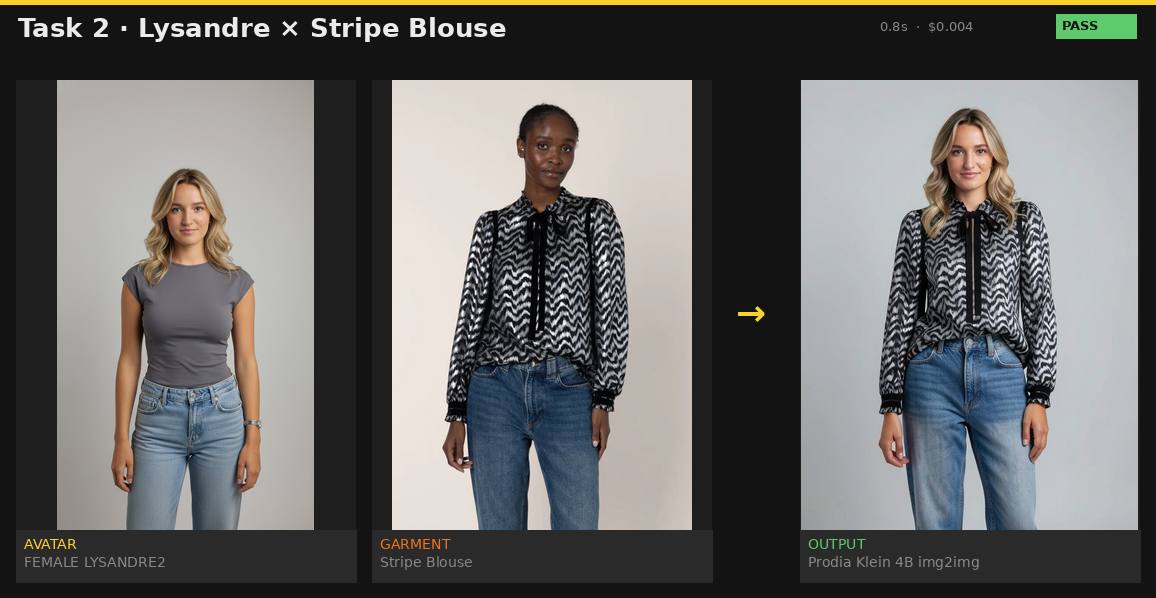
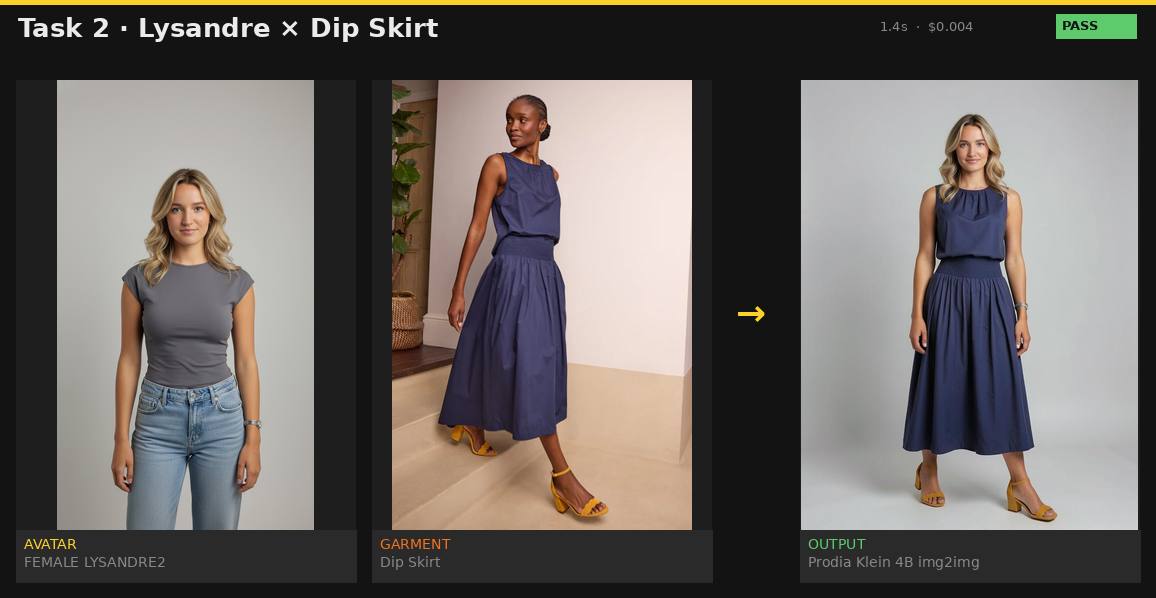
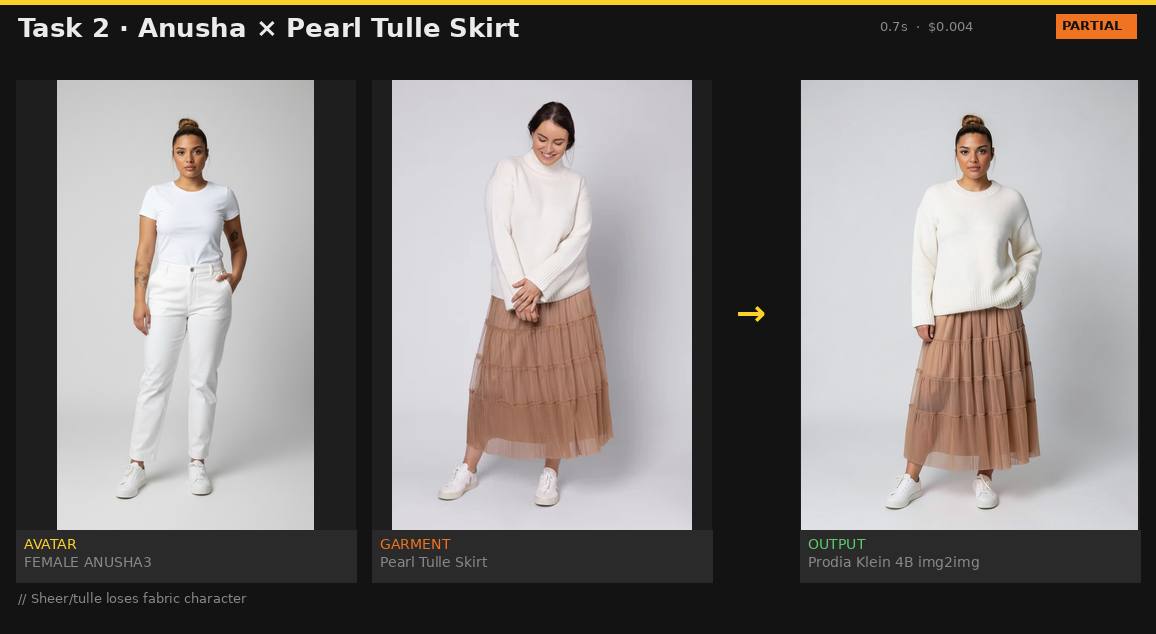
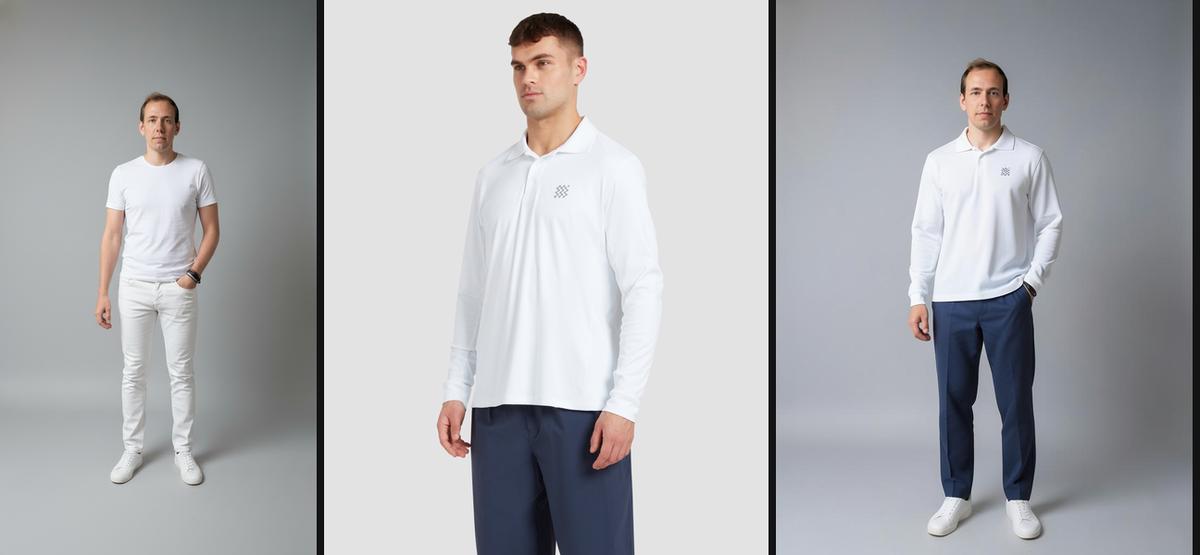
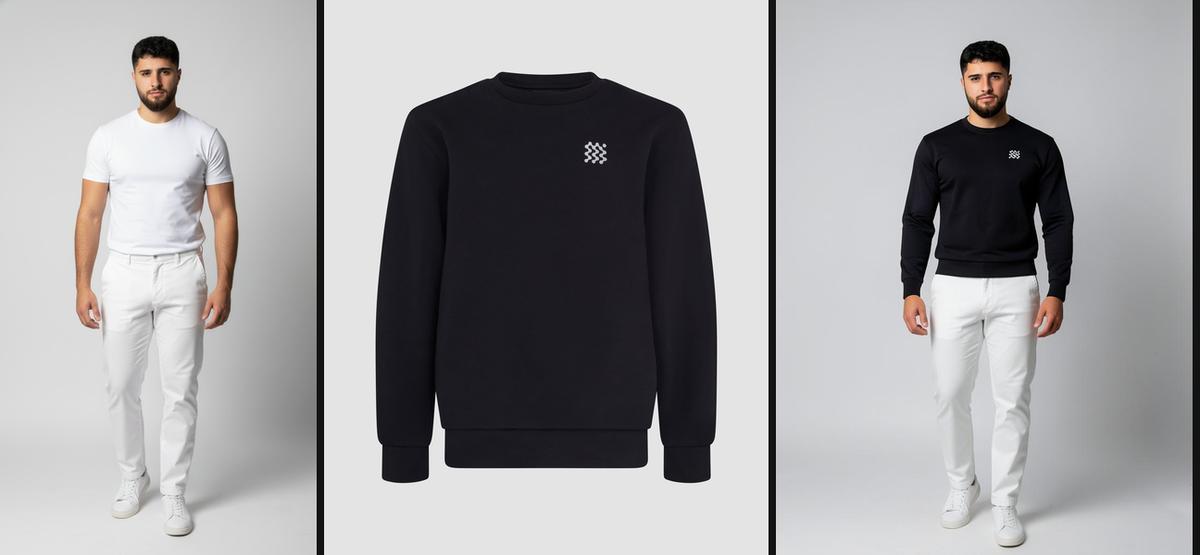
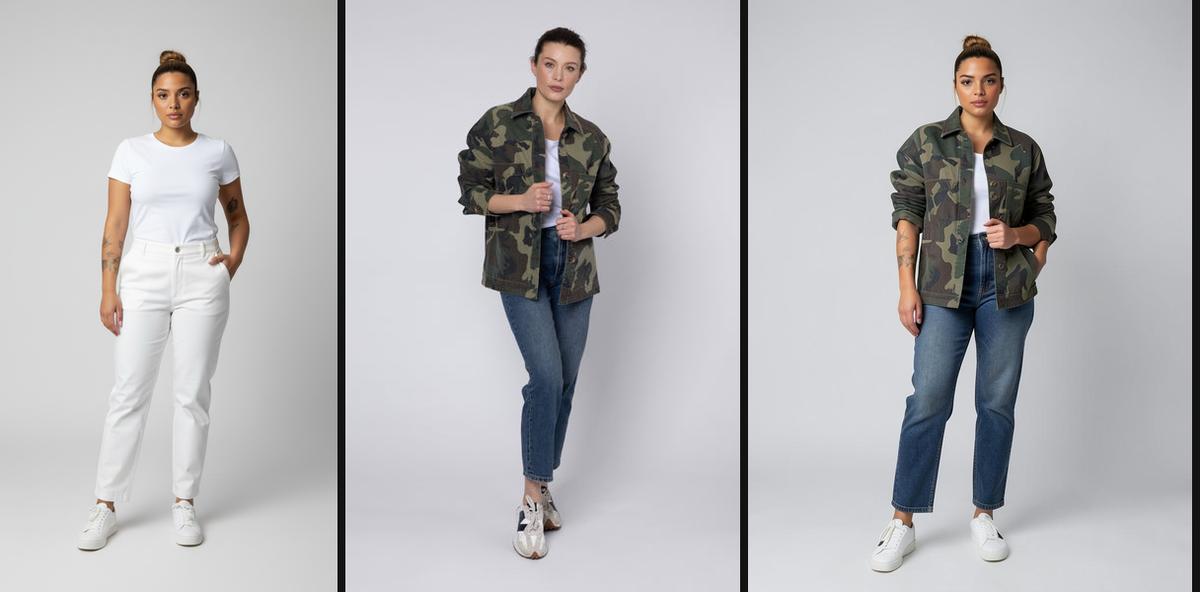
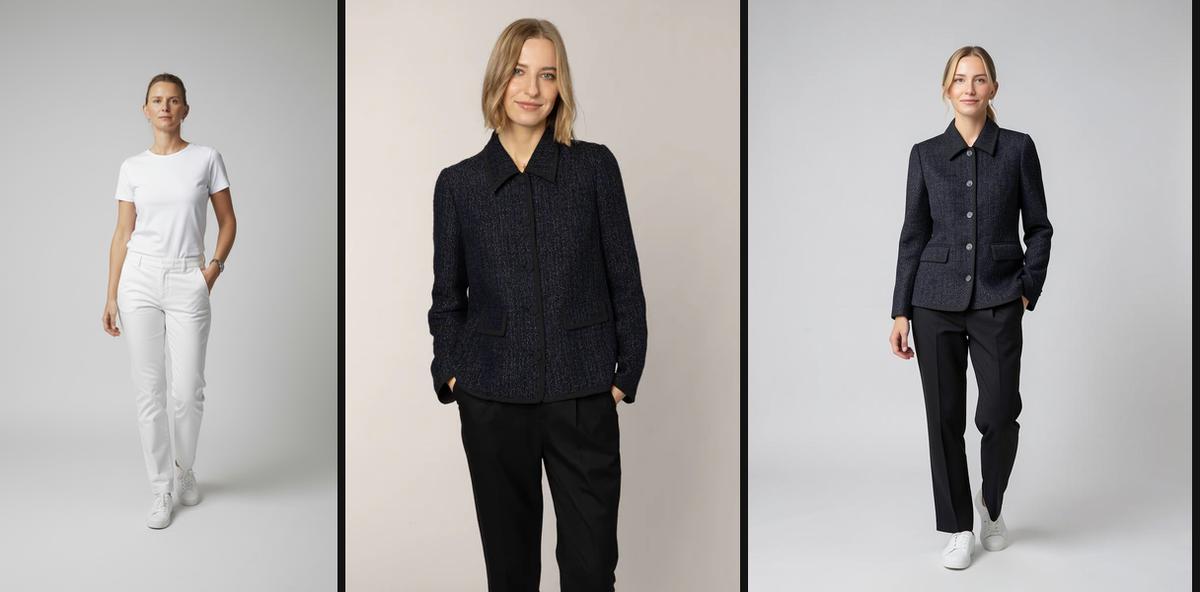
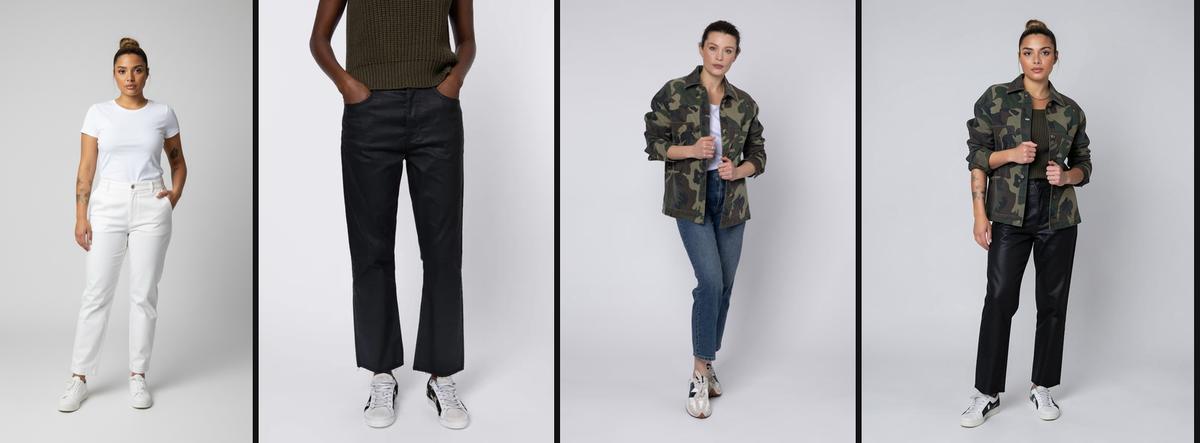
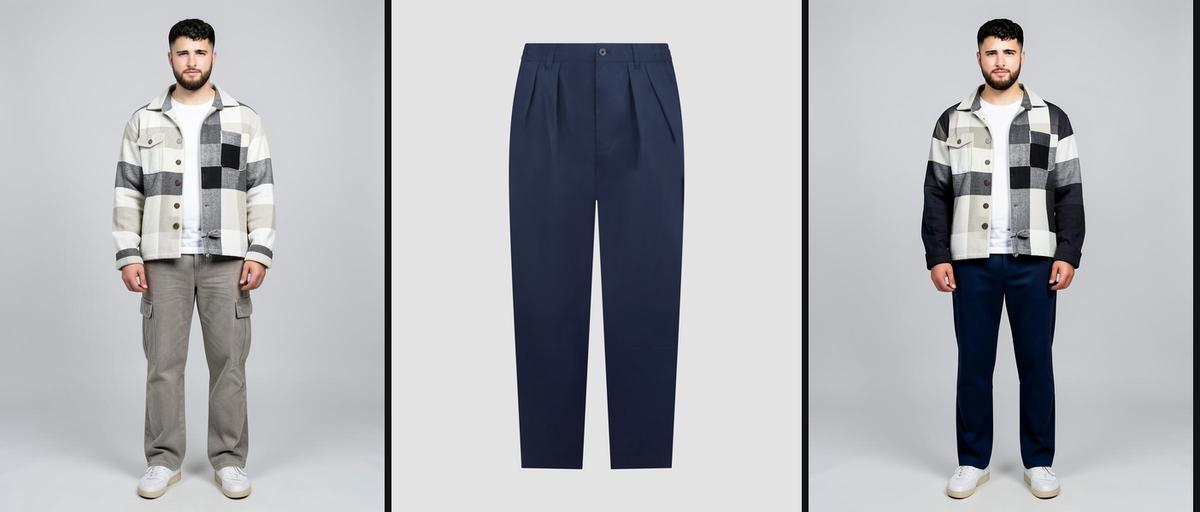
Place one garment onto an avatar as a static image. Each comparison shows the reference avatar, the garment input, and the Prodia output side by side. 5 per gender as specified.
Input: Reference avatar + 1 garment image · Output: Static try-on image · Model: Klein 4B img2img (multi-image input) · Preprocessing: None
Avatar source: All try-ons use the provided reference avatars from the user->avatar/avatars/ folder, not our Task 1 generated avatars.
Male — 5 single-item try-ons
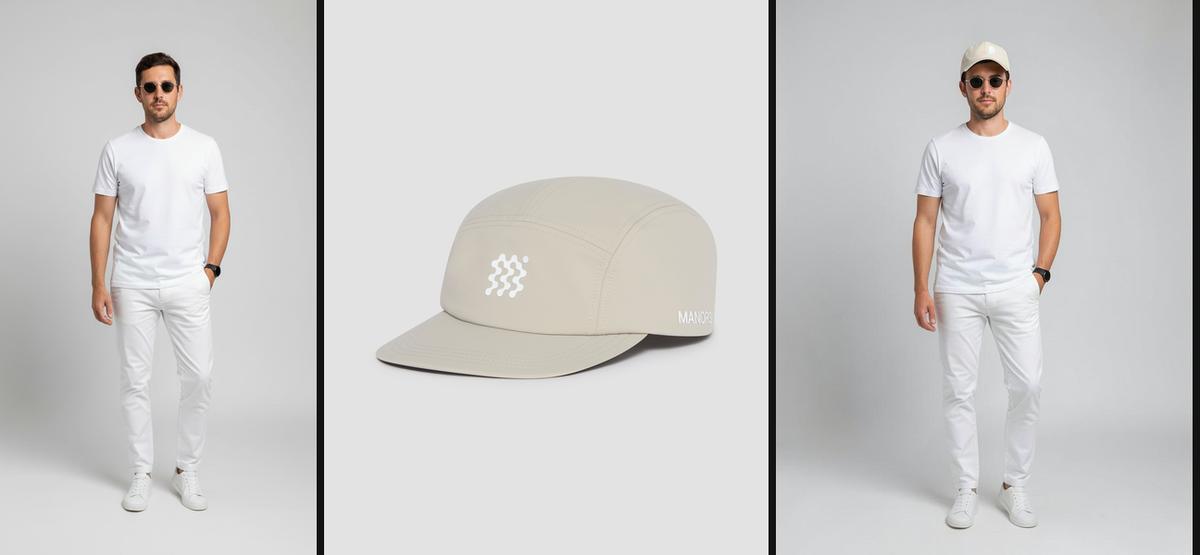
Cap now clearly visible on head. Improved from PARTIAL → PASS with more explicit prompt.
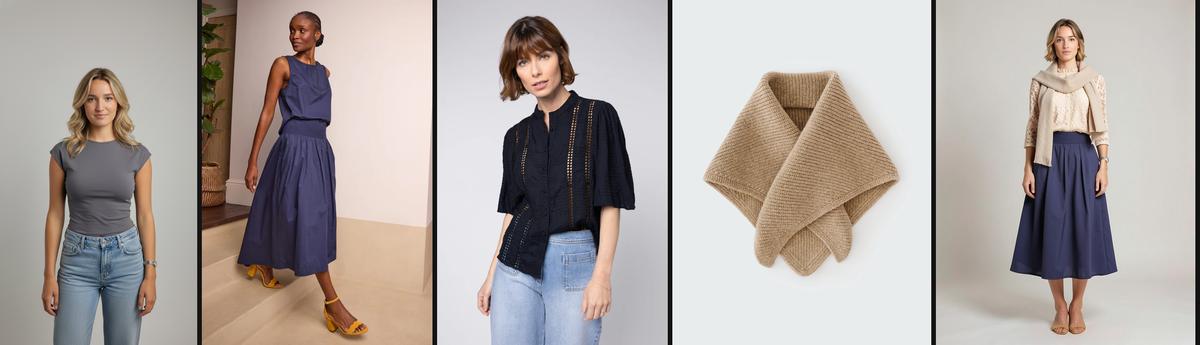
Female — 5 single-item try-ons
Quality notes: Strong on structured garments (blazers, trousers, sweatshirts). High color accuracy. Accessories (caps) not reliably rendered. Sheer/tulle fabrics lose translucency but preserve structure. Face identity persists across try-ons.
Task 03
Multi-Item Try-On
10 outfits · inference.flux-2.klein.4b.img2img.v1 · $0.004/each · 0.8–6.5s
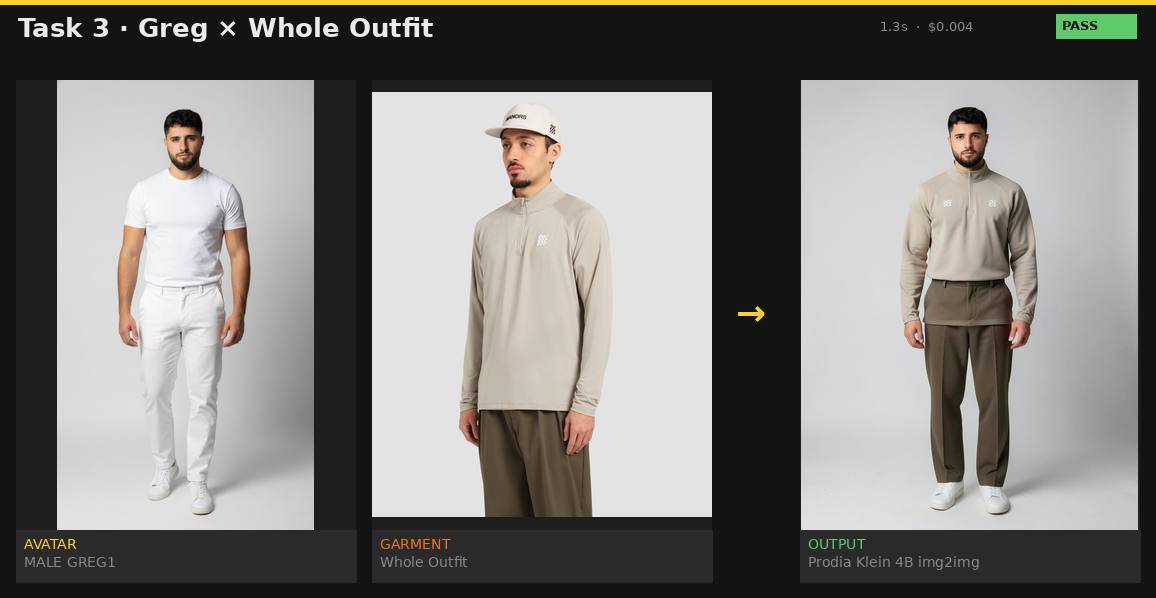
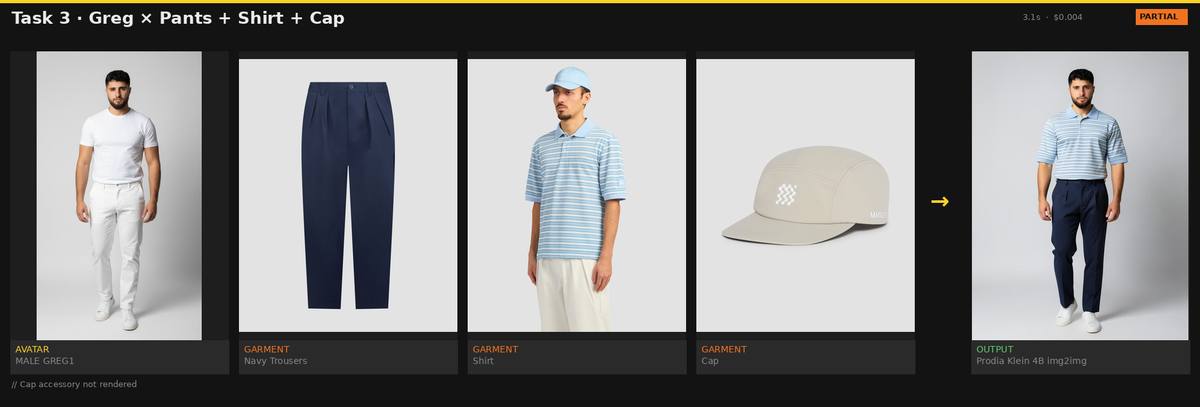
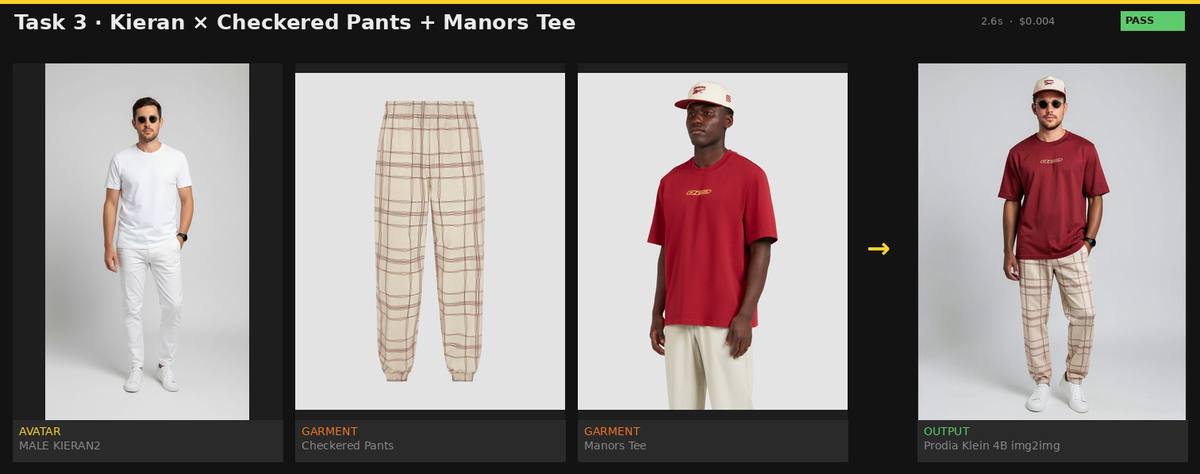
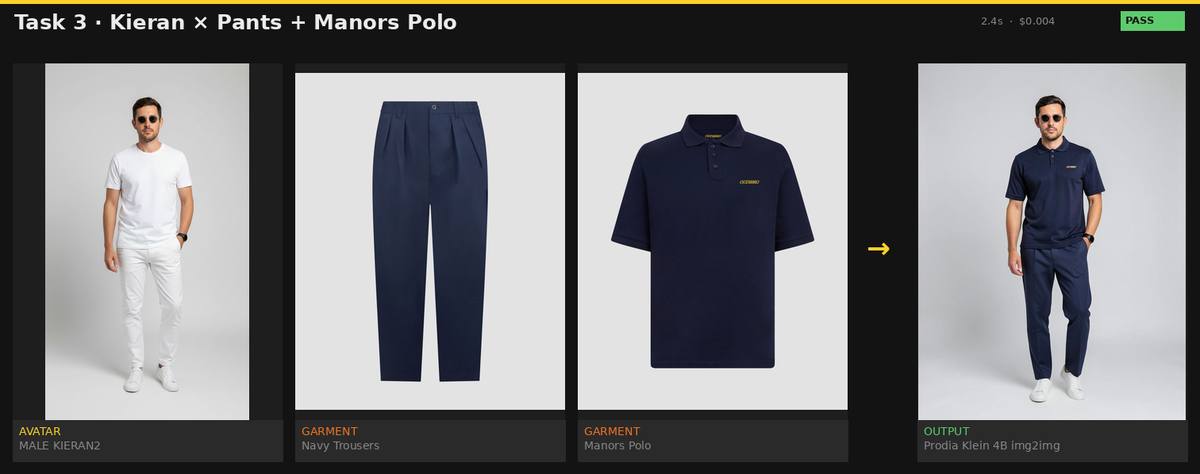
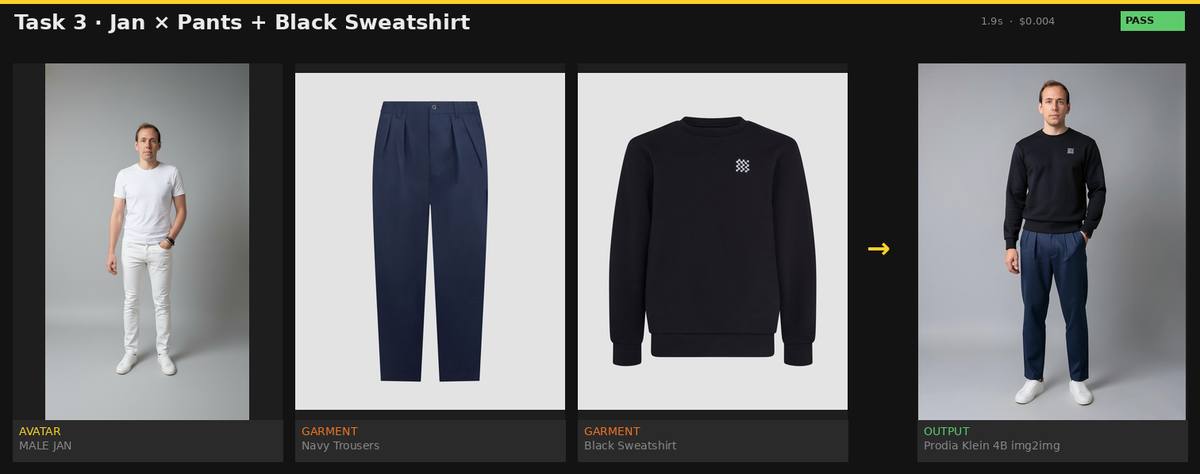
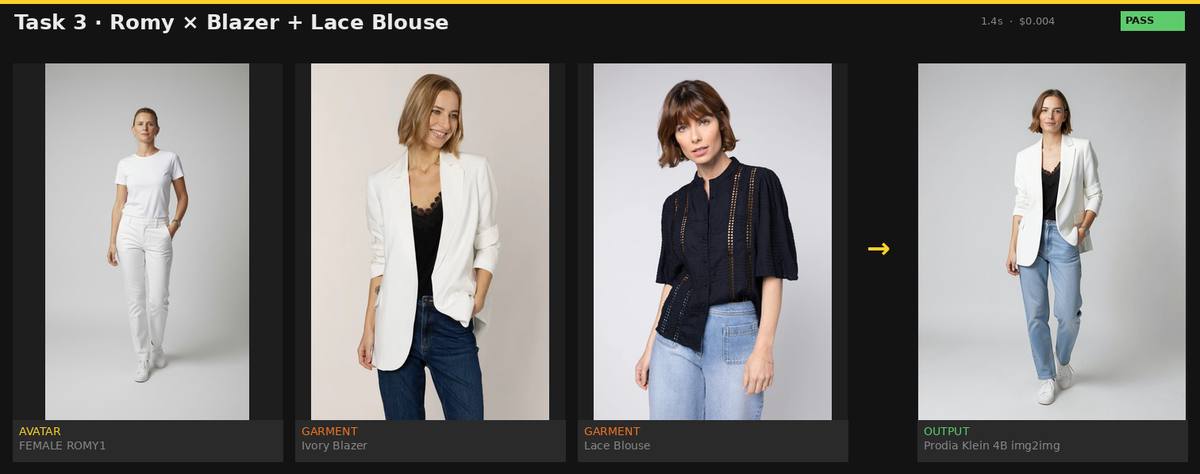
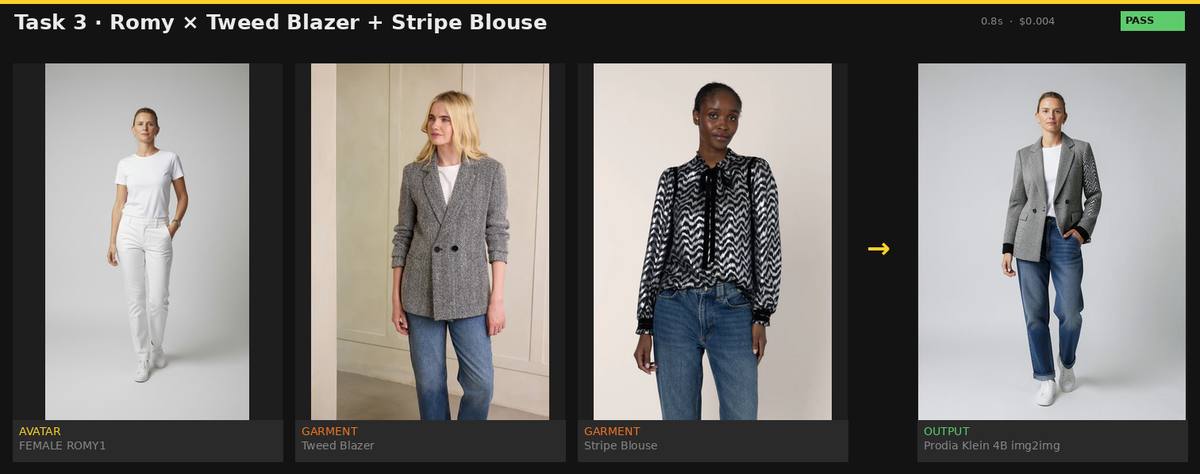
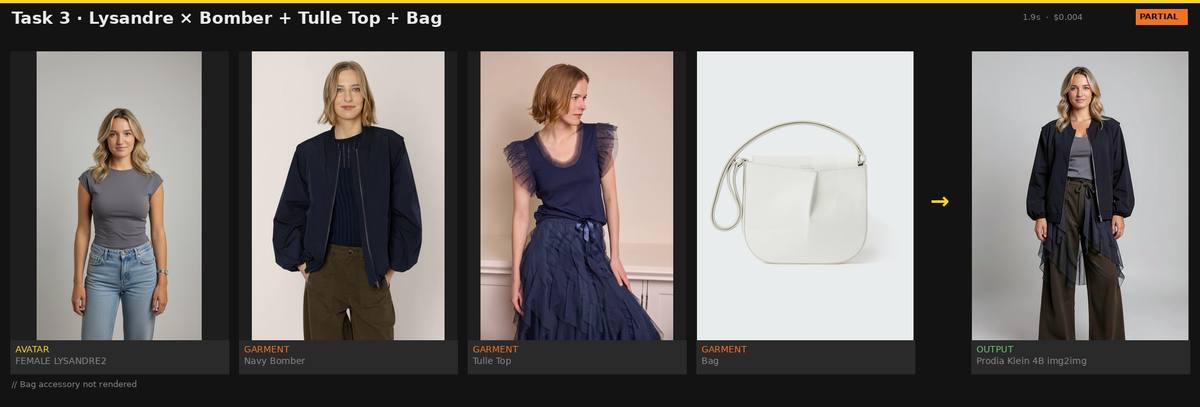
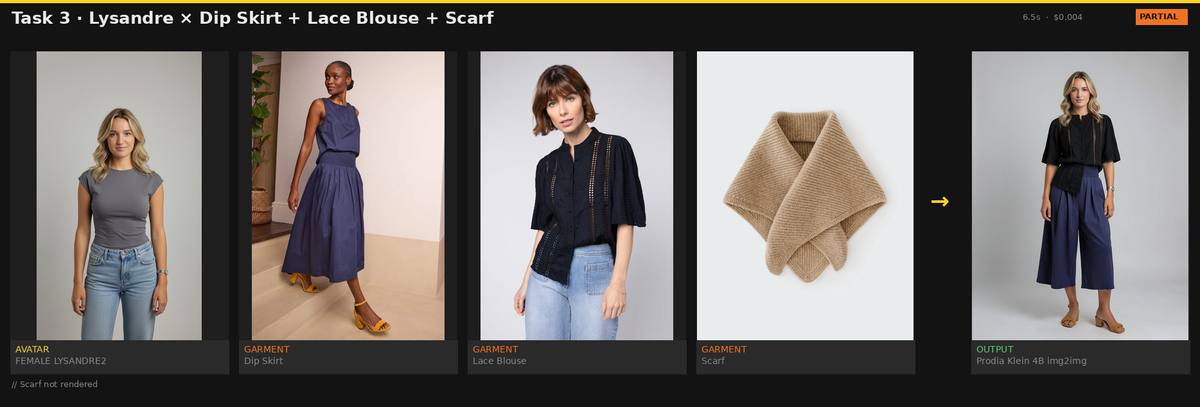
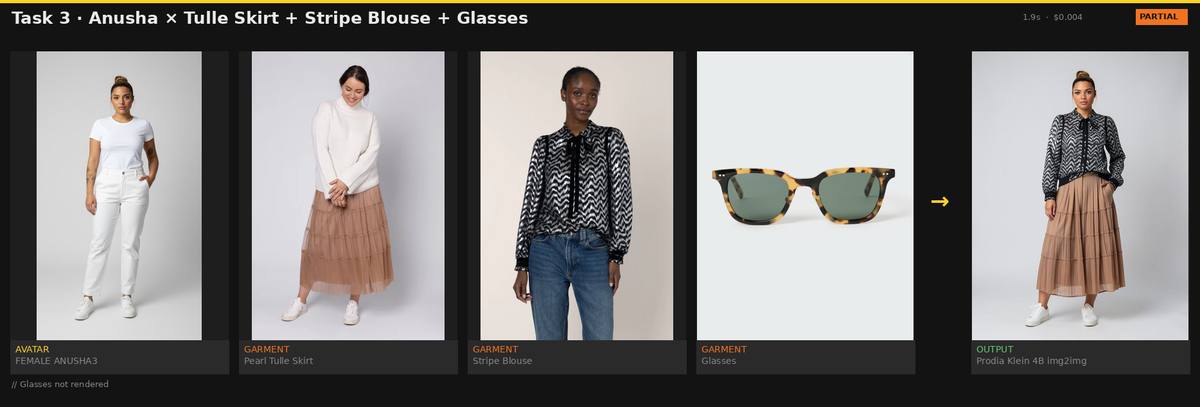
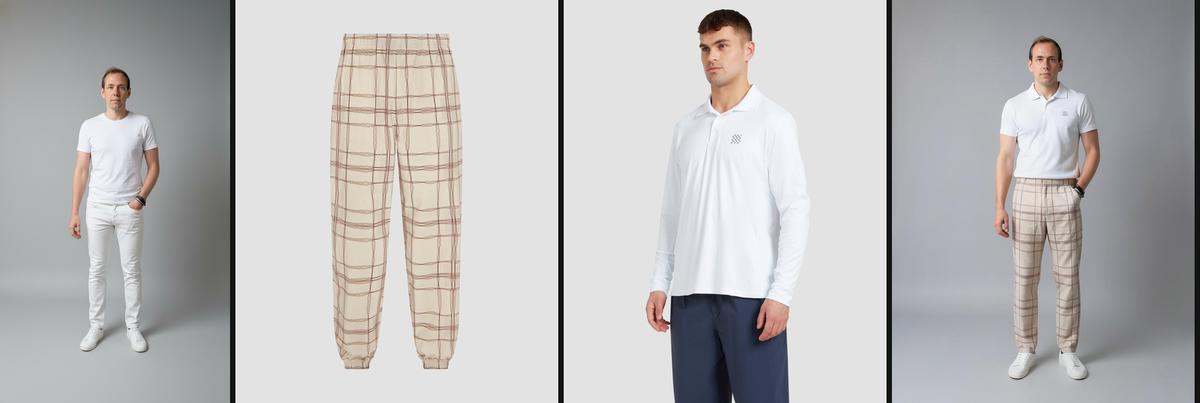
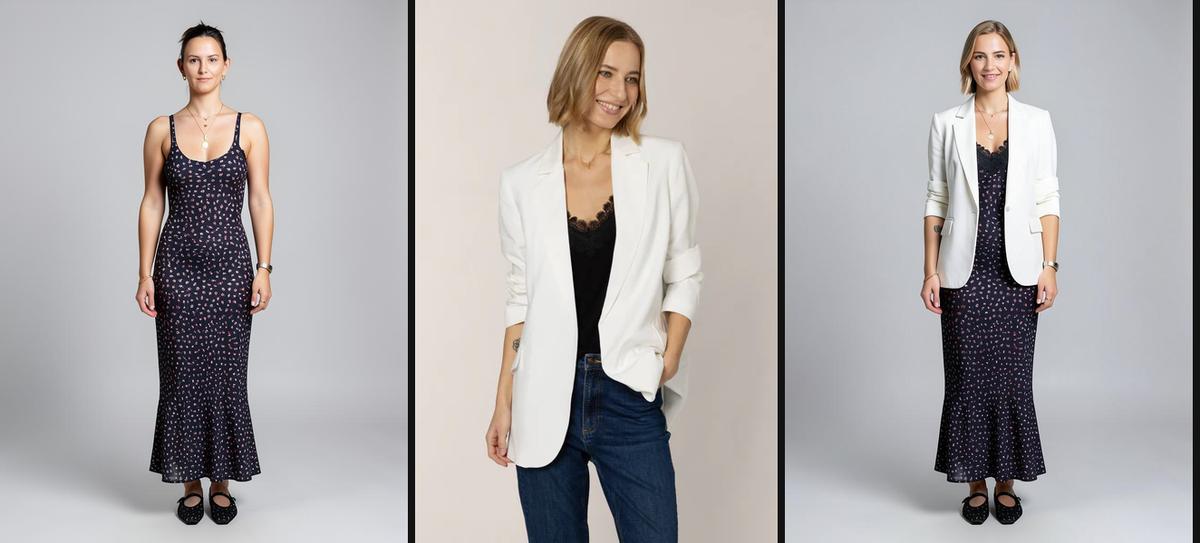
Dress the avatar in a complete outfit (2-3 garments simultaneously) in a single image. Klein 4B accepts up to 8 input images natively, so no garment stitching or pre-processing is required. Each comparison shows the avatar, all garment inputs, and the combined output.
Input: Reference avatar + 2-3 garment images (multi-image API call) · Output: Single try-on image · Model: Klein 4B img2img · Preprocessing: None — native multi-image input
Avatar source: All try-ons use the provided reference avatars from user->avatar/avatars/. Outfits follow the exact combinations specified in the README.
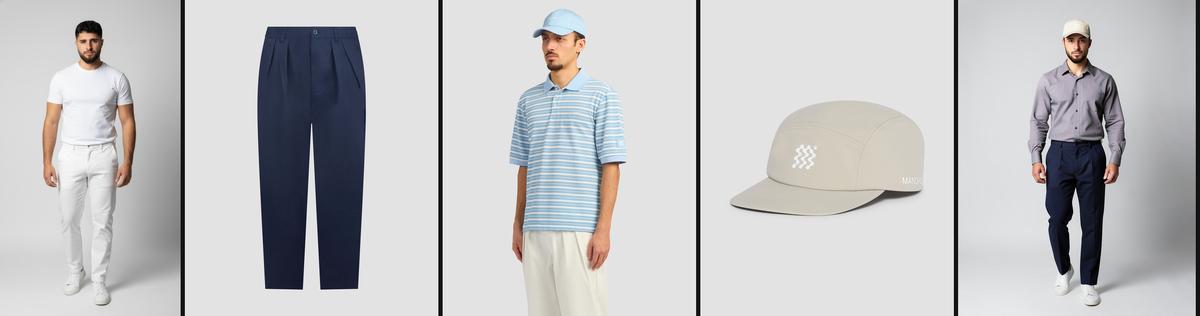
Male — 5 multi-item outfits
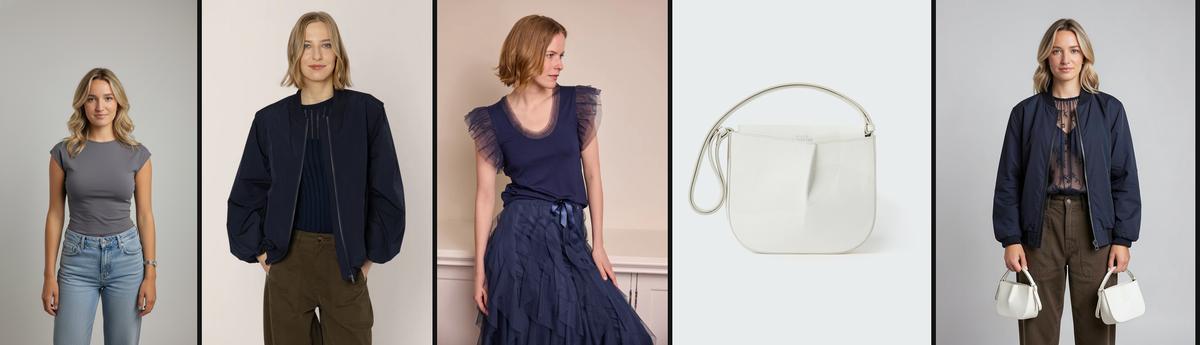
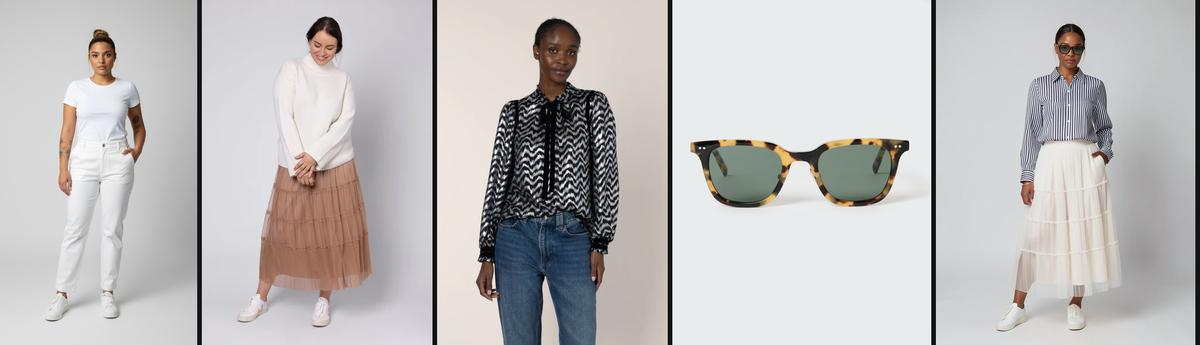
Female — 5 multi-item outfits
Quality notes: Klein 4B's native multi-image input is a genuine capability advantage. Layered outfits (blazer over blouse) work well. Accessories (bags, glasses, scarves) frequently absent. The intentionally hard female set (tulle, lace, metallic) shows real limits with accessories and fabric character, but core garments are present.
Task 04
Front-Facing Try-On Videos
10 videos · inference.wan2-2.lightning.img2vid.v0 · 480p · ~10s each · $0.09/video
Short front-facing animations of the try-on results. Camera stays front-facing throughout. Subtle natural movement (left-right sway, breathing, fabric settling) consistent with a fitting room experience. No rotation, no back-of-garment views. 2 single-item + 3 multi-item per gender as specified.
Input: Try-on output image (from Tasks 2/3) · Output: ~5s video, 480p, front-facing · Model: Wan 2.2 Lightning img2vid · Preprocessing: Portrait images padded to 16:9 with neutral gray background to prevent aspect ratio distortion
Male — 2 single + 3 multi
Female — 2 single + 3 multi
Quality notes: All 10 videos generated in ~9-10 seconds at 480p. Natural fitting room movement — subtle sway, breathing, fabric settling. Camera stays front-facing; no rotation. Video quality is a function of the input avatar image quality. At $0.09/video and ~10s generation time, this is extremely competitive.
Retried Results — Improved Prompts
Quality Analysis
Per-Category Breakdown
honest assessment by garment type
Not all garment categories perform equally. Here's a transparent breakdown of where Prodia's current models excel and where gaps remain.
✓ Strong — Standard Garments
Pants, trousers, jeans — color and fit accurate. T-shirts, polos, sweatshirts — silhouette correct. Blazers, jackets — structure well-preserved. Button-up shirts — collar/button details rendered.
Pass rate: ~95% on standard garments
◐ Mixed — Complex Fabrics
Tulle skirts — structure captured, sheerness reduced. Lace blouses — pattern present but simplified. Tweed textures — approximated. Metallic/sheer — interpreted as solid equivalents.
These represent the intentionally hard Eleven Loves set
△ Inconsistent — Accessories
Caps/hats — rendered with explicit prompting (retry), missed on first attempt. Bags — visible when specifically prompted. Scarves — partially rendered. Glasses — inconsistent.
Accessories require explicit prompt engineering
Why this matters: Prodia's current model is a general-purpose img2img style transfer (Klein 4B), not a purpose-built VTO model. It excels at interpreting garment style and applying it to an avatar — but precise garment-level fidelity requires a dedicated VTO architecture. The results above represent what's achievable today, with a clear path to improve.
Section 11
Assessment & Next Steps
honest evaluation · clear path forward
What Works Today
Standard garments (pants, shirts, jackets, blazers) render with strong fidelity at $0.004/image and sub-5s latency. Multi-item outfits compose well. Video generation adds natural movement. The full pipeline — user photo → avatar → try-on → video — runs end-to-end via API with zero manual intervention. At 97% lower cost per image, Prodia offers a production-viable path for high-volume VTO.
Where Gaps Remain
This benchmark uses a general-purpose img2img model, not a dedicated VTO architecture. Accessories (caps, bags, glasses) require prompt engineering. Complex fabrics (tulle, lace, sheer) are approximated. Fine garment details (exact button count, lapel width, logo placement) are interpreted rather than preserved. Identity preservation is ~80%, not pixel-perfect.
The Path Forward
Prodia's infrastructure is model-agnostic — as purpose-built VTO models emerge, they can be deployed on Prodia's platform with the same cost structure and API. The value proposition isn't just today's model quality — it's the infrastructure layer that makes any model economically viable at scale. We'd love to explore a partnership where Swap Commerce's domain expertise meets Prodia's inference economics.
Important note: Klein 4B img2img is a general-purpose model performing style transfer, not a dedicated virtual try-on model. For pixel-accurate VTO at the garment detail level required by luxury brands, a purpose-built VTO model would be needed. Prodia's strength here is speed, cost, and the infrastructure to deploy any model — including Swap Commerce's own VTO model — at scale.